

From the Mediterranean coast to the mountain foothills, Languedoc unfolds as a mosaic of landscapes where wine is more than a product—it’s a way of life. This sun-drenched land invites visitors to immerse themselves in an authentic art of living.
Our journey begins in the spectacular setting of La Clape (once a Roman island), at Villa Soleilla – Château L’Hospitalet Wine Resort, Beach & Spa – a true ode to wine tourism and well-being. Beyond its serene rooms and suites, Villa Soleilla marks the beginning of Gérard Bertrand’s orange wine adventure. Orange Gold 2023 is particularly striking, with its radiant, exotic aromas of lychee, pineapple, kumquat and orange zest. Château L’Hospitalet La Clape 2022 Blanc stands out for its lively freshness, saline tension, and complex notes of fennel, white-fleshed fruit, linden blossom and garrigue. The 2022 Rouge impresses with ripe fruit intensity (raspberry) lifted by subtle toasted notes and warm spices (cinnamon, clove, liquorice). A delicate saline touch lingers on the finish, carried by the sea breeze. The Gérard Bertrand experience continues at l’Hospitalet Beach on Narbonne’s shoreline, where a superb dinner showcases La Grande Bleue Méditerranée 2024. Its lively, fresh and fruity palate, underpinned by perfect minerality, mirrors the coastal landscape around us.
In the Corbières, at Château de Luc, the Fabre family has created a playful, immersive experience for wine lovers of all ages. Historical family objects are displayed—including an ingenious tool for measuring wine colour, awarded at the 1889 Exposition Universelle—alongside an escape game, juice tastings for children, wine-themed riddles, a wine casino and a life-sized Cluedo to explore the world of viticulture. Jeanne Fabre, Vice President of the Corbières appellation, and her sister Clémence represent the new generation, while their brother André is expanding into cider and craft brewing.
Across 300 organically farmed hectares and more than one million bottles produced, the tasting reflects the estate’s diversity: Grande Courtade Alvarinho Blanc 2024 shows crisp expressiveness; Jumelles Blanc 2024 Corbières reveals fine minerality and floral notes; Pure Cinsault Rouge Lux Levis 2022, made without added sulphites, is silky and delicate; Jumelles Rouge 2023 Corbières offers hints of dark chocolate, fig and black olive; and Château Fabre Gasparet 2021, Cru Boutenac, delivers intense, spicy character with sour cherry and dark fruits.
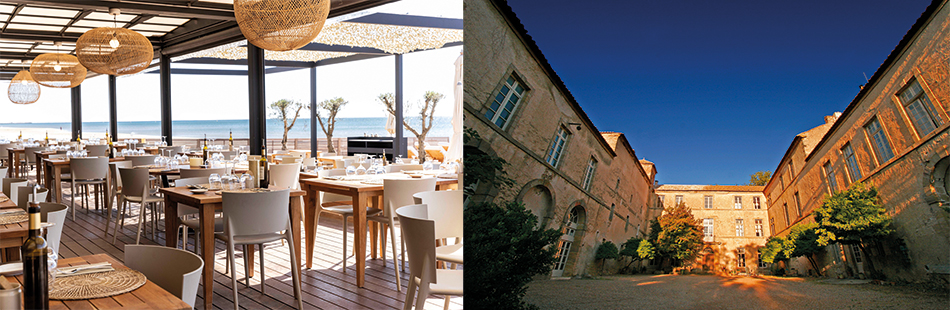
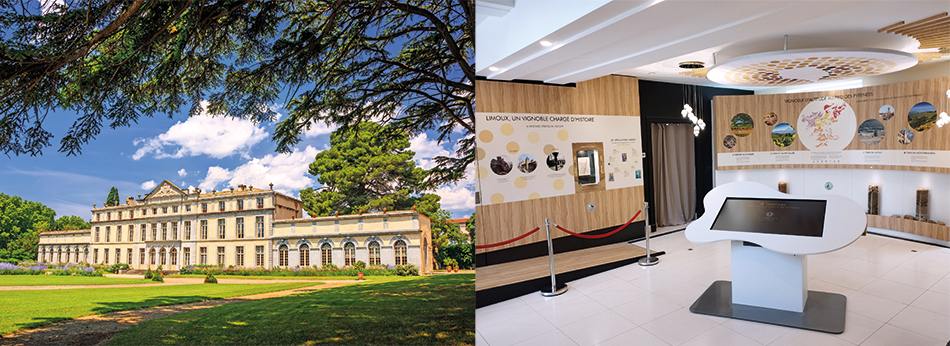
A few kilometres away, La Table du Château de Pennautier welcomes guests in a former sheepfold with its refined bistronomic cuisine, delighting visitors for over two decades. Nearby stands the Château de Pennautier (Vignoble Lorgeril), nicknamed the “Versailles of Languedoc”. Built in part by Levaux, architect of Versailles, and surrounded by gardens originally designed by Le Nôtre, the château offers an exceptional setting. Labelled “Remarkable Garden” and featuring period furniture listed as Historic Monuments, it unveils beautifully preserved ceremonial rooms. Beyond the château visit, wine lovers can explore the 45-hectare Lorgeril vineyard along scenic paths and through the cellars, where four centuries of winemaking heritage come to life.
In Limoux, the Maison des Vins immerses visitors in a characterful appellation. On a 200 m² site, a sensory trail with interactive sound and scent quizzes introduces the local AOPs. Historical archives dating back to 1544 document the first recorded order of Blanquette de Limoux, widely considered the oldest sparkling wine in the world. Mauzac, the emblematic local grape variety, is instantly recognisable by the white down on its leaves (blanc = blanquette in the local dialect) and its aromas of green apple, acacia blossom and apricot. This genetic diversity is safeguarded by the Mauzac Conservatory, which has catalogued nearly 200 white and 50 pink mauzac clones. Since 2014, microvinifications have identified three particularly promising clones, now officially approved—an exemplary initiative illustrating Languedoc’s commitment to preserving its viticultural heritage while embracing the future.
Through each encounter across the Languedoc’s rich terroirs, one truth stands out once again: wine here is not merely meant to be tasted: it is lived, shared, and told.
Sandy Bénard-Ravoisier
A trip to Alsace, especially to Strasbourg, takes you into a world...
In 2015, the Climats of the Burgundy vineyards were inscribed on the UNESCO...
Hotel Le Cep***** continues its tireless commitment to excellence and remains constantly in search of innovation...