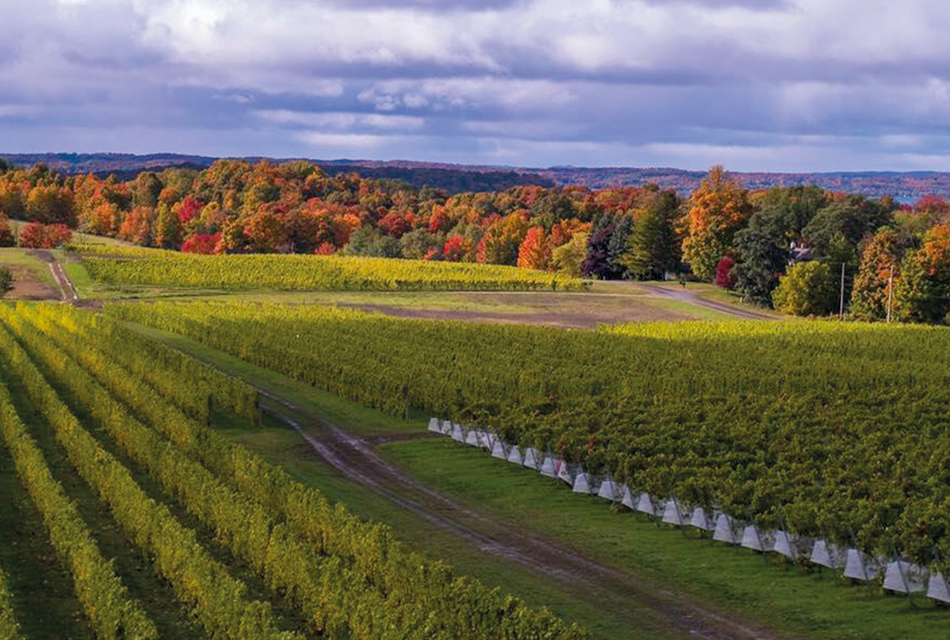
At first glance, Michigan hardly looks like wine country. With its harsh winters and landscapes of forests and lakes, one might think more of winter sports than harvest season. Yet the Great Lakes themselves, powerful natural climate regulators, make viticulture not only possible, but promising. Their moderating influence softens winter frosts and extends the growing season, allowing for slow ripening, moderate sugar levels and beautifully preserved natural acidity. The result? Bright, vibrant wines with marked mineral tension, a rare signature at this latitude.
Michigan’s viticultural history dates back to the 19th century, when European settlers planted the first vines around Detroit. Prohibition brought this early progress to an abrupt halt, before St. Julian Winery revived production in 1921. Real expansion, however, began in the 1970s near Traverse City, with the establishment of the Leelanau Peninsula and Old Mission Peninsula AVAs, today the state’s most renowned winegrowing areas.
Michigan’s terroir is defined by well-drained sandy-loam soils and a lake-tempered climate reminiscent, in some respects, of the Rhine or Alsace. Riesling reigns supreme here with taut acidity, pure fruit, a subtle saline edge. Pinot Gris, Chardonnay and Gewürztraminer show fine aromatic balance, while Pinot Noir and Cabernet Franc yield supple, precise reds.
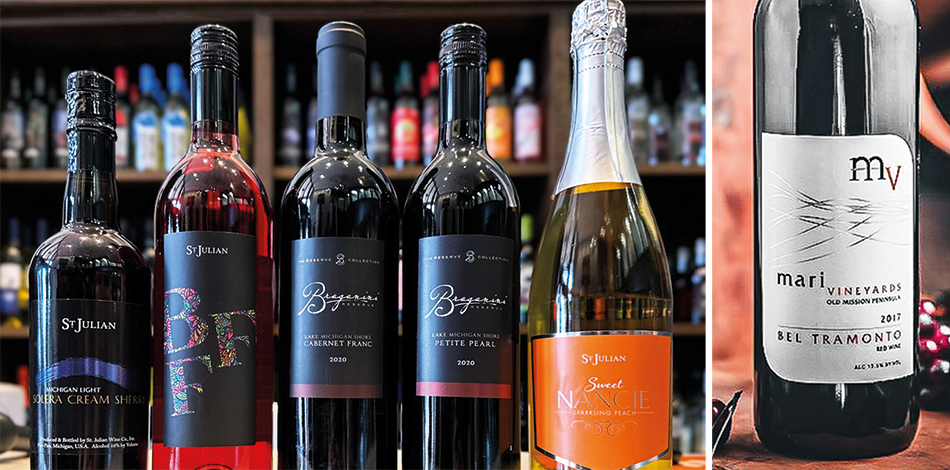
On these lake-cooled hills, winemakers have learned to work with the cold and favor varieties suited to northern climates. Château Chantal, on Old Mission Peninsula, combines wine tourism with technical precision: its dry Rieslings and sparkling wines are regional benchmarks. Mari Vineyards, founded by Marty Lagina, stands out for its bold introduction of Italian varieties such as Nebbiolo and Sangiovese, resulting in elegant, distinctive reds. Further south, St. Julian Winery, the state’s oldest, continues to champion a classic, generous style rooted in local tradition.
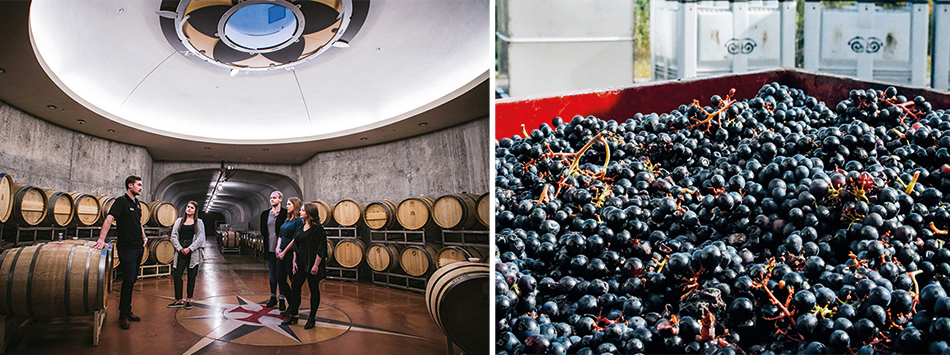
At Mari Vineyards, Italy meets the Great Lakes. Nebbiolo shows nerve and charm, a natural match for bison burgers or local blue cheese. Sangiovese is juicy and vibrant, perfect with wood-fired pizza or farmhouse cheddar grilled cheese. As for whites, Riesling crackles with freshness and pairs beautifully with lake fish or fried-fish tacos. Precise, energetic wines that show Michigan knows how to delight the palate.
Driven by a new generation of internationally trained and forward-thinking vintners, Michigan is now investing in sustainability, experimentation and the promotion of its cool-climate identity. Research on disease-resistant varieties, the rise of wine tourism and growing trade interest are propelling the state firmly into the ranks of North America’s most promising emerging wine regions.
AC

No need to sing anymore, as Pierre Dupont did in Ma vigne in 1845: “Good Frenchman...
Terroir wines, those that gain depth over the years while gradually enhancing the distinctive...